
Master Plant Dieta
Frequently Asked Questions
Click a category or scroll below to explore

PINO BEWA, THE TRADITION OF MASTER PLANT DIETING, AND THE MEDICINE
-
Pino Bewa is an ancestral medicine tribe of shamanic healers and spiritual warriors with a mission to resurrect ancient wisdom and traditions. Pino Bewa is also the consortium of earthly and celestial forces joined together by a common purpose to assist in the spiritual unfoldment of every human being, one ceremony at a time, one person at a time, and one energy at a time until we each remember who we are and why we are here.
Led by Ka’i Sam’e, a Shipibo-trained maestra, alongside Ancient Alchemy Initiate Path apprentice co-facilitators Astrea, Senen Mea, and KayKatana, ceremonies are offered to catalyze collective, ancestral, and individual healing and consciousness expansion. The confluence of ancient practices, benevolent spirits and ancestors and our sovereign free will ignites a sacred alchemical process of transmutation, transformation, and rebirth.
Pino Bewa means hummingbird icaro in Shipibo. The hummingbird represents Noya Rao, the Queen of the Plant Kingdom, a Master Plant Doctor revered by the Shipibo. The Shipibo peopleuphold one of the oldest Amazonian traditions of working ceremonially with the medicine and are considered guardians of Ayahuasca. Noya Rao means the medicinal plant that flies. In journeys or dreams, Noya Rao, the matriarch of the Pino Bewa community, will appear as a hummingbird, singing her sweet melodies, leading us into a multitude of universes, and illuminating truth.
-
While the Ascension Diet prepares ceremony participants for ceremonies, the master plant dieta is more strict and is a fundamental aspect of the Peruvian Shipibo tradition wherein the dietero (one who diets a master plant) fasts or adheres to a strict diet of rice and plantains, enters isolation in the Amazon jungle, and consumes a liquid extract of a Master Plant Doctor to receive the teaching and healing powers that the plant's spirit holds. Typically, an Ayahuasca ceremony opens a master plant dieta, and an arcana ceremony closes it.
-
Pino Bewa organizes group dieting trips for those interested in not only the Shipibo traditions and plant medicine but also profound self-discovery, healing, and transformation. We partner with stewards of retreat centers and lead 10-, 14-, and 30-day master plant dieta trips at their remote and rustic retreat centers deep in the Amazon jungle. Dieting the Master Plant Doctors under the supervision of Ka’i Sam’e in the natural habitat of the plants and trees and spending time with and singing to them is an experience that cannot be replicated elsewhere.
-
Botanically speaking, Ayahuasca is a vine native to the Amazon rainforest named Banisteriopsis Caapi. Medicinally speaking, Ayahuasca is a thick brew made by combining the bark of the Ayahuasca vine and the leaves of the Chacruna plant (Psychotria Viridis), producing medicine that, once consumed, enables the consciousness to wander from the body and journey to other spiritual realms.
-
The medicine we work with in the jungle only contains ayahuasca vine and chacruna leaves. We do not source medicine containing monoamine oxidase inhibitor (MAOI), dimethyltryptamine (DMT) substitutes, or any other Amazonian plant medicine.
-
Master Plants are unique plants known by Indigenous tribes as teachers or doctors who transmit knowledge, guidance, and healing to dieters. They bring us closer to the spiritual realm and help dieters work through stuck energy and suppressed trauma imprints. They are also used for their medicinal properties to relieve or cure illness and disease. The Mahua-Lopez lineage works with the following five Master Plant Doctors: Noya Rao, Marusa, Bobinsana, Chullachaqui, and Mokapari. Pino Bewa includes two other Master Plants that are essential parts of ceremonial healing—Mapacho and Padma Rao.
-
Ka’i Sam’e has dieted all the Master Plant Doctors and continues to return to the Amazon jungle in Peru to re-diet them at least once a year. KayKatana has dieted Padma Rao, Noya Rao, Marusa, Bobinsana, and Chullachaqui. Astrea has dieted Noya Rao, Chullachaqui, and Bobinsana. Sėnėn Mea has dieted Noya Rao and Chullachaqui. Ceremony assistants and Ancient Alchemy Initiates have dieted or are on the path to dieting the Master Plant Doctors.
-
A dietero/a, meaning dieter in Spanish, refers to those who will be dieting a Master Plant Doctor.
-
A pasajero (masculine) or pasajera (feminine) means "passenger" in Spanish and refers to someone who journeys and receives healing during a ceremony.
PREPARING FOR MASTER PLANT DIETS
AND AYAHUASCA CEREMONIES
-
We thoroughly screen prospective dieteros to ensure it is safe for them to work with the medicines. As part of this process, applicants are required to complete a comprehensive intake form covering their medical and medication history, which takes approximately 45–60 minutes to complete.
Although we believe the medicine and the tradition of Master Plant dieting should be available to everyone who feels called, there are some individuals for whom working with the medicine is not advised due to medical conditions or medication contraindications. Applicants will be notified once their intake has been reviewed and a determination has been made regarding their clearance to participate in a dieta in Peru.
-
We recommend following the Ayahuasca Diet for at least two weeks before your Master Plant Dieta retreat begins. Maintaining a longer dieta beyond the minimum two-week period is optional and enhances your experience, as you'll be as energetically clean as possible when receiving the medicine and Master Plant extracts. It is common for people to begin the Ayahuasca Diet three to eight weeks before the retreat. Tune into your body, current state of health, medication regimen, and lifestyle to determine when to begin the Ayahuasca Diet.
Committing to the Ayahuasca Diet demonstrates your dedication to healing—to Ayahuasca, the Master Plant Doctors, and yourself. The longer you adhere to the diet, the smoother the ceremonial process. The cleaner your body and the freer it is of impurities, toxins, and energies that are not your own, the less time Ayahuasca needs to spend purging those energies during ceremony, allowing her and the Master Plant Doctors to focus more time and energy on the deeper healing work they have planned.
-
TYRAMINE: Tyramine is an amino acid that naturally occurs in cheese and other fermented foods. In excess, tyramine is known to trigger migraines. Head pain blocks the Third Eye chakra, the energy center associated with intuition and inner wisdom, making it more difficult to pray, meditate, or sit in silence. Aged, fermented, and leftover foods are also understood to carry "dead" or heavy energy that weighs down the spirit.
In addition, Ayahuasca contains a monoamine oxidase inhibitor (MAOI). Foods high in tyramine are traditionally restricted because tyramine can cause dangerously high blood pressure in people taking certain MAOIs.
TRYPTOPHAN: Tryptophan is an essential amino acid used by the body to produce serotonin and melatonin, with some of its richest sources found in animal proteins. While it is a necessary building block for health, excess tryptophan can induce a physical state of heaviness, sleepiness, and energetic stagnation that can trap the mind in a dense, sluggish fog, making deep contemplation difficult.
Ayahuasca also affects the serotonin system. Combining Ayahuasca with certain serotonergic medications or substances can increase the risk of serotonin syndrome, a severe drug reaction associated with excessive serotonergic activity.
-
Filling the days leading up to ceremony with consciousness-raising activities, such as journaling, meditation, shamanic journeying, Reiki healing, sound healing therapy, tuning forks, qigong, and vapor baths, to name a few, can enhance your ceremonial experience, help you maintain internal balance and groundedness, and raise your frequencies. These practices can help you connect more quickly and deeply with Ayahuasca, the Master Plant Doctors, the Ancestors, and all allied spirits.
-
The more we clear and prepare the body beforehand, the more energetically clean we are as we enter ceremonies with Ayahuasca. In addition to adhering to the Ayahuasca Dieta and refraining from toxic and unhealthy conversations, media, and situations, there are several other traditional practices used to support purification.
Fasting is a practice that dates back centuries and plays a central role in many cultures and religions. Through fasting, we seek to sharpen our spiritual awareness and hear the voice of higher consciousness. By fasting, we humble ourselves as we enter the presence of the Divine. Fasting demonstrates the depth of our desire when praying for something. It reflects our willingness to make a personal sacrifice in devotion to our prayers. Ayahuasca and the Master Plant Doctors honor deep desire and faithful prayer. Fasting has also been associated with several health benefits, including weight management and blood sugar regulation, and has been studied for potential effects on cancer and neurodegenerative disorders.
Kambo ceremonies involve an intense period of flu-like purging, typically lasting 20–30 minutes. Traditionally, this practice is used to detoxify the body, dispose of toxins, strengthen stamina, promote clarity, and address health concerns such as anxiety and depression.
Purgatives, or vomitivos, such as sangre de grado, are used by the Shipibo to cleanse the body, stomach, and intestinal tract in preparation for Ayahuasca, allowing the medicine to be received more effectively.
Vapor baths are traditionally used to prepare and detoxify the body before Ayahuasca ceremonies, removing impurities and unwanted energies. Ceremony facilitators can prepare vapor baths for dieteros and individuals seeking energetic clearing and detoxification outside ceremonial settings as a personal wellness practice.
-
Certain prescription medications, including some antidepressants, are contraindicated with Ayahuasca and may require a medically supervised washout period before a Master Plant Dieta. A minimum of two weeks is sometimes referenced in preparation guidelines, but the appropriate washout period depends on the specific medication, its duration of action, and the individual's medical circumstances.
Please refer to the Preparation document for information about contraindicated medications.
Many antidepressants treat depression by increasing or regulating serotonin activity in the brain. Ayahuasca also affects the serotonin system. Combining Ayahuasca with certain antidepressants can increase the risk of serotonin syndrome, a severe drug reaction caused by excessive serotonergic activity.
Any medication discontinuation or adjustment must be evaluated and supervised by the prescribing healthcare professional. Participants should not stop prescribed medications independently to prepare for ceremony.
-
Please refer to the Preparation document to find out all contraindicated medications and conditions.
-
If you have epilepsy, high blood pressure, heart conditions, or diabetes, you should consult your healthcare professional to determine whether working with the medicine is medically appropriate. Medications used to manage these conditions may have potentially dangerous interactions with Ayahuasca. Any consideration of changing or discontinuing medication must be made under medical supervision.
Individuals diagnosed with schizophrenia, bipolar disorder, or borderline personality disorder require particular consideration during screening because of the potential psychological risks associated with Ayahuasca. Certain psychiatric conditions may make participation unsafe.
Psychiatric medications and antidepressants can also present serious contraindications. Although some preparation protocols reference a minimum 14-day washout period, some medications require substantially longer periods, and others should not be discontinued. The appropriate course must be determined in consultation with the prescribing healthcare professional.
Refer to the Ayahuasca Preparation document for an extensive list of contraindicated conditions and medications.
-
Going deep into our journeys requires that our energy fields be as clear as possible. Sexual interactions with another person involve a heightened degree of energy exchange. This exchange can interfere with one's energetic field. Within this tradition, sexual activity, including self-pleasure, is understood to involve a considerable release of energy, leaving the energetic field more open and receptive.
It is important to abstain from all sexual activity for at least seven days before and three days after ceremonies. There may be additional spiritual benefits to extending these periods of abstinence.
-
Television, movies, books, news, and other media, including social media, deeply influence our emotional, mental, and physical states. Because we are energetic sponges, we absorb the energetic frequencies of the media content we consume.
It is recommended to restrict or eliminate all types of media consumption for at least one week before ceremonies and instead focus on consciousness-expanding and energy-clearing activities, such as meditation, breathwork, shamanic journeying, walks in nature, and anything that helps you connect more deeply with yourself.
-
Alcohol and recreational drugs can weaken our spirit and mind, affecting our emotional, social, spiritual, and physical well-being. Within our spiritual framework, these substances can compromise our energetic force field, leaving us more spiritually porous. With holes in our energetic shield and our guard down, we may leak vital energy reserves, allowing external, interloping energies to gain access.
Like Ayahuasca, cannabis, also known as marijuana or ganja, can facilitate experiences of expansiveness and healing. However, the ways these natural medicines work with us to create transformation are understood to be diametrically opposed. Due to this significant difference in their spiritual natures, participants are advised not to combine the two and to carefully consider the implications of bringing these powerful Plant Spirits together.
During Master Plant Dietas, dieteros physically consume Ayahuasca and Master Plant extracts to establish a direct relationship with the medicines and receive their teachings and healing. Within our tradition, cannabis use can interfere with this process, influencing the energetic relationship between the dietero and the Master Plant Doctors and potentially affecting the ceremonial container. For this reason, we advise abstaining from cannabis during dieta preparation and throughout the retreat.
Plant Spirits often anchor their teachings and facilitate healing through spaces of light (illumination) or darkness (shadow or subconscious). Some plants work with both light and dark energies. When considering which medicine path to pursue for transformation, Ayahuasca and cannabis are both regarded as equally effective and sacred, holding profound teachings and lessons.
Although Ayahuasca can take us through the darkness and seems to specialize uniquely in shadow work, she is a lightworker. Ayahuasca originates in the underworld but understands that true healing means we must emerge from the ashes, in a blaze of glory, from the shadows into the light. She is an expert at magnifying the nightmarish aspects of our subconscious minds that often remain hidden and out of the spotlight. These dark dungeons and crevices are not Ayahuasca's but our own. She merely shines a light. She knows that the more we face those demons and transmute their energies, the more healing, empowerment, and joyfulness we can attain. A challenging night working with Ayahuasca can seem like a never-ending journey through hell, but in almost all cases, we feel reborn and renewed the following day.
In contrast, cannabis not only works in the shadows, but she also thrives in them. She is not a lightworker. Within this spiritual understanding, working with a spirit that thrives in the shadows can make it challenging to ground ourselves, find our bearings, and discern truth from illusion. Whereas cannabis can take away our pain, Ayahuasca can show us what causes the blockages that trigger our suffering and help us extract them or change our relationship with them.
Cannabis can go straight to the source of the pain and take it away in an instant, without requiring us to face it, understand it, trace it to its origins, or work toward building a life without it. Cannabis works in the shadows, the hidden space in which she thrives, to swiftly remove our deepest traumas, fears, inhibitions, and resistance. However, there is potential for cannabis misuse. Relief from pain may be fleeting, and there can be real spiritual and material consequences if we rely on it as a crutch.
Many long-term cannabis users have reported greater difficulty connecting with Ayahuasca.
-
Working with a certified, trauma-informed somatic practitioner can help us formulate a clearer intention for ceremony, identify the roots of trauma, and better prepare us to navigate the energetic healing appropriate for this stage of the soul's journey.
Our intentions help guide the Ayahuasca journey and our work with the Master Plant Doctors throughout the dieta. A clearly defined, meaningful intention that addresses the root issues affecting our lives can deepen our ceremonial experiences and support profound healing.
Pino Bewa offers Intention-Setting Sessions to help clarify and refine your intentions for ceremony, as well as Cosmic Chrysalis Sessions, a personalized, goal-oriented, one-on-one ceremony preparation program spanning 3–12 weeks, depending on your individual needs.
-
On the day of ceremony, consuming light, vegetarian meals and fasting for 4–5 hours beforehand is intended to reduce the potentially heavy aspects of purging. Traditional preparation protocols may also recommend abstaining from liquids for two hours before ceremony.
Fasting is understood to help clear the body so that nothing interferes with the medicine. The absence of food minimizes distractions and encourages focus, as our bodies and brains are less occupied with processing and digestion, allowing participants to dwell more deeply in the spirit world.
Within our ceremonial framework, fasting amplifies the visionary Ayahuasca experience. Flavorful or spicy foods and sexual stimulation are understood to draw participants back toward the density of the third dimension.
Fasting requires discipline and the ability to overcome temptations. The discipline and focus cultivated through fasting are intended to help participants navigate visionary states with greater ease.
PREPARING FOR TRAVEL TO PERU
-
American citizens do not need a visa to travel to Peru. Other dieters from other national origins should consult with their consulates and diplomatic agencies to determine their unique requirements for traveling to Peru.
-
The Amazon Rainforest is a different environment from what you may be used to. Jungle insects and wild animals carry diseases, water is unsafe to drink unless treated, and medical facilities may be many hours away. It is crucial to consider the known risk factors when deciding to receive vaccinations. Travel insurance is recommended.
The CDC and WHO recommend the following vaccinations for Peru: typhoid, hepatitis A, polio, yellow fever, chikungunya, rabies, hepatitis B, influenza, COVID-19, pneumonia, meningitis, chickenpox, shingles, Tdap (tetanus, diphtheria and pertussis) and measles, mumps and rubella (MMR).
-
The following are our recommended accommodations in Iquitos:
Sarisa House — Basic accommodations without AC. 50–80 soles per night.
Hospedaje Neydita — Basic accommodations without AC. 50–80 soles per night.
Central Apartments — Fully equipped accommodations with AC. 120 soles per night.
Jungle House — Located close to Dawn on the Amazon. Starting at 169 soles per night.
Boulevard 251 — Fully equipped accommodations with AC, located close to Dawn on the Amazon. Starting at 237 soles per night.
Amazon Green Hotel — Basic accommodations with AC available for an additional charge. Starting at 90 soles per night.
Hotel La Casona — Located very close to the Plaza de Armas, offering basic accommodations with AC available for an additional charge. 90–250+ soles per night.
Studio 69 — Located approximately 10 blocks from the city center, so you will need to take a mototaxi to get around. However, it is nice to be a little removed from all the action. This is a truly affordable option, offering modern, newly renovated, clean accommodations with security, AC, and a complimentary Ayahuasca-friendly breakfast on the rooftop. Starting at 106 soles per night.
Boulevard 251 is easiest to book by emailing them directly, although it can also be found on major booking websites. The other accommodations can be found through Google or booking platforms such as Booking.com, Hotels.com, and Hostelworld.
The accommodations listed above are reasonably priced for Iquitos, with rates ranging from approximately $13–$70 per night.
If you would like to splurge, especially after spending time dieting in the jungle, when the comforts of home may be especially appreciated, we recommend:
DoubleTree by Hilton Hotel — Located directly on the Plaza de Armas, next to the outdoor Shipibo Market, numerous ATMs, and other amenities and services. Starting at $125 per night.
-
The following restaurants offer Ayahuasca Dieta-friendly menus:
Dawn on the Amazon — Mal. Maldonado 185, Iquitos 16002, Peru
La Noche — Malecón Maldonado Nº 177, Boulevard, Iquitos, Loreto, Peru
The following restaurants do not offer specific Ayahuasca Dieta menus but are considered suitable for post-dieta dining as dieteros gradually reintroduce foods into their energetic fields:
Restaurante Fitzcarraldo — Napo 102, Iquitos 16002, Peru
Maria's Cafe — Jirón Nauta 292, Iquitos 16002, Peru
Iron House (La Casa de Fierro) — Jirón Putumayo 182, Iquitos 16002, Peru
The Yellow Rose of Texas — Jirón Putumayo 174, Iquitos 16002, Peru
Ikiitu — Jirón Fitzcarrald 456, Iquitos 16002, Peru
Amazon Bistro — Mal. Tarapacá 268, Iquitos 16002, Peru
Restaurant Vegano Darshan — Jr. 2 de Mayo 469, Iquitos 16001, Peru
Restaurant Vegano Darshan is fully vegan. For approximately 25 soles, you can enjoy a multi-course meal that includes fruit juice, hot tea, soup, salad, a main entrée, and dessert.
-
Spots are limited, and dieta groups are intentionally small. Deposits are due one month before the start of the dieta to secure a dietero's spot.
Deposits are accepted electronically through Zelle, Venmo, Cash App, or PayPal. Specific payment instructions will be provided to registered dieteros.
-
The remaining balance is due one week before the start of the dieta.
Payments are accepted electronically through Zelle, Venmo, Cash App, or PayPal. Specific payment instructions will be provided to registered dieteros.
-
Typically, dieteros work with Mapacho and a pipe made from the wood of the tree they will diet. If the dietero is not dieting a tree, the pipe may feature carvings representing the plant they are working with.
A custom-designed pipe costs 200 soles (approximately $54.58, depending on the current exchange rate). For a Noya Rao pipe with an elaborate design requiring more wood, the cost is 350 soles (approximately $95.52).
Full payment for custom pipes is due one month before the start of the dieta to ensure sufficient time for carving.
Ceasar, a local artisan we work with, will carve the pipes according to your specifications.
Pipe order payments are accepted electronically through Zelle, Venmo, Cash App, or PayPal.
-
Consulting with the Maestra overseeing your dieta or an experienced Master Plant Doctor consultant can help determine which plant you should diet.
Specific Master Plants may appear in our dreams to let us know when it is time to diet them. Some Master Plants are selected because their Plant Spirits possess personal attributes or medicinal properties that the dietero either lacks or already embodies abundantly.
-
If you plan to diet Noya Rao or Chullachaqui, please notify Pino Bewa at least one month before the start of the dieta to ensure sufficient time to procure the tree bark needed to prepare the extracts.
-
The following items are essential for the jungle. You may already have some of these supplies and plan to bring them with you. Please coordinate with us beforehand to ensure you have everything you need for your time in the jungle.
Loose Mapacho
Mapacho cigarettes
Agua de Florida
Palo santo
Lighters
Altar cloth
Ceremony candles
Sangre de grado
Chiric Sanango pomada
Foldable or other lightweight handheld fan
Mosquito coils
-
Please refer to this packing list.
-
Click here to view the current exchange rate between the Peruvian sol (PEN) and the U.S. dollar (USD).
-
Some vendors accept U.S. dollars or credit cards, but cash payments in Peruvian soles are generally preferred.
-
There are several ways to exchange currency when traveling to Peru:
Exchange currency before traveling. You can exchange money through a bank or currency exchange shop in your country of origin. Banks often offer lower fees, making them a potentially more economical option.
Exchange currency in Lima. If you are traveling through Lima, you can exchange money at a currency exchange counter.
Withdraw Peruvian soles from an ATM. ATMs are often one of the best options for obtaining local currency. In many cases, ATMs in the country you are visiting offer competitive exchange rates and lower fees than other currency exchange services.
Exchange U.S. dollars at Ari's Burger in Iquitos. You can exchange crisp U.S. dollar bills for Peruvian soles at the counter of Ari's Burger, located at Jirón Próspero 127, Iquitos 16002, Peru, near the Plaza de Armas. Bills must be crisp and in good condition, or Ari's Burger may refuse to exchange them.
-
Peru follows Peru Standard Time (PET, UTC−5). The country has only one time zone and does not observe daylight saving time.
From approximately March to November, Peru Time is the same as North American Central Daylight Time. From approximately November to March, it is the same as North American Eastern Standard Time.
-
Learning the language of the country you are visiting as a guest is always a respectful and wise idea. Even a few simple phrases can go a long way.
Most Peruvians do not speak English. Spanish and Shipibo are the main languages spoken in the communities we visit.
We recommend downloading the Spanish-English language pack in Google Translate to your phone so you can use the translation features even without a Wi-Fi connection. However, the transcription feature may not be available offline.
-
Emergency Contact: Be sure to provide Pino Bewa with your emergency contact information.
Passport: Ensure that your passport has at least six months of validity remaining from your date of entry into Peru. Peruvian immigration authorities will deny entry if your passport does not meet this requirement.
Global Entry: Consider applying for Global Entry to enjoy a more streamlined customs and immigration process when returning to the United States.
Notify Your Bank: Notify your bank of your travel plans to reduce the likelihood of your card being suspended due to unexpected international transactions.
Shipibo Market: Bring extra money in Peruvian soles if you would like to purchase items from the Shipibo Market at the retreat center. This is optional.
Tips: Consider bringing extra money in Peruvian soles to tip the workers at the retreat center. Tipping is optional.
Travel Bags: Choose travel bags that are easy to carry on your back. Guides will assist with luggage, but motorized transport will not be available in the jungle.
Laundry: Retreat center staff can wash your clothes for you. Iquitos also has reliable, fast, and affordable laundromats that can launder your clothes within a day.
Extra Bag: Consider bringing an extra foldable bag to use as a carry-on or checked bag for your return flight home, especially if you plan to purchase items during your trip. This bag can easily be folded and packed inside your main luggage, eliminating the need to purchase an additional bag in Iquitos.
THE DIETING EXPERIENCE
-
We follow the traditional practice of dieting plants in complete silence and isolation from other guests. The only conversations will be with the person serving your plant extract, who will check on each dietero and provide any necessary dieta-related support. Dieteros are also permitted to ask questions when needed.
The dieta opens with an opening ceremony. Dieteros consume their first plant extract the morning after the ceremony and traditionally begin a fasting period of at least two to three days, with the exact duration determined by the Maestra supervising the dieta.
Within this tradition, dry fasting (no water except for the plant extract) is encouraged during the first two to three days, although dieteros are advised to listen to their bodies and not push themselves beyond their limits. After this initial fasting period, dieteros may choose to continue fasting or begin eating foods permitted under the strict dieta guidelines. Some dieteros continue water fasting until the end of their dietas. Those who choose to extend their fasting period are encouraged to resume eating at least two days before the Arcana ceremony, which closes the dieta, to regain their strength.
Dieteros can make the most of their dieting experience by leaving their electronics behind and refraining from relying on technology or modern conveniences.
Personal care products should be free of chemicals, fragrances, and oils. They should also be free of other plant materials that could compete energetically with the Master Plant being dieted.
-
The Shipibo traditionally hold ceremonies in darkness. Daylight can be distracting and harsh, while bright light can become irritating, if not outright overwhelming, to our senses.
Visions are best experienced in darkness, as external light can make them more difficult to perceive. Holding ceremonies in complete darkness reduces external stimulation, allowing participants to journey more deeply without distraction.
During the day, we are accustomed to relying heavily on our sense of sight. Nighttime offers reduced visibility and an opportunity to turn inward rather than depend on our physical vision. Daytime stimulation can also be uncomfortable during intense journeys.
Within our tradition, truth is revealed at night, allowing the deeper aspects of our shadows to be explored and worked through. The vibrational environment becomes calmer, and the spirits "come out to play" under the cover of darkness.
Sleeping in the ceremonial space after the ceremony concludes is highly recommended, as the space contains the concentrated energies of the ceremony, creating an environment conducive to continued journeying and spiritual work for dieteros.
-
Traditionally, dieteros would spend at least a year dieting in the jungle. The demands of modern life often make such extended periods of dieting impractical. Within this tradition, shorter dietas can be just as powerful when dieteros commit to dry or water fasting, complete silence, and isolation from others.
Dry fasting means the dietero consumes only the liquid plant extract in the morning and evening, along with swallowed Mapacho smoke.
Water fasting means the dietero consumes unlimited water, the liquid plant extract in the morning and evening, and as much swallowed Mapacho smoke as they can tolerate.
Within this traditional framework, each day of dry fasting is considered equivalent to three days of dieting, while each day of water fasting is considered equivalent to two days of dieting.
-
A soplada is a "blowing ritual" of great importance in Indigenous Amazonian traditions. Soplar means "to blow" in Spanish. This traditional practice uses one's breath, or life essence, acknowledging the healing energy of breath as a carrier of intentions for grounding, cleansing, sealing, and protection.
In the Shipibo tradition, Mapacho and Agua de Florida are used to offer a soplada to oneself or another person. During ceremonies, sopladas are performed throughout the evening for ceremonial and therapeutic purposes.
MAPACHO: In traditional Indigenous Amazonian medicine, Mapacho is considered a sacred and powerful plant. When offering a soplada, Mapacho smoke serves to cleanse the spirit and body. Mapacho is also used to cleanse the facilitators, dieteros, ceremonial space, serving cups, and medicine itself.
Mapacho and its smoke are considered great healers and protectors, helping to establish connections with other Plant Spirits by opening channels of communication with the spiritual world.
AGUA DE FLORIDA: Agua de Florida ("Florida Water") is a scented cologne containing essential oils and alcohol, used in the Amazon as a shamanic energetic cleansing agent.
Agua de Florida is used to offer sopladas to oneself or others and is blown onto the hands, face, head, chest, and back. This is usually done when someone is struggling during a ceremony or needs immediate grounding. It is also used to settle overactive or unsettled spirits.
We also use Agua de Florida to cleanse our clearing tools and as a sacred fire starter for our smoke baths.
-
The Master Plant Doctors use the final ceremony, the Arcana, to ensure that the healing work conducted throughout the dieta takes root. The Arcana is also intended to help dieteros withstand the familiar distractions, pressures, and temptations they may encounter upon returning to their everyday lives.
The Arcana provides an energetic cloak of protection or shielding, allowing dieteros to preserve the sanctity of the healing work performed during their spiritual surgeries and throughout the dieta.
Be prepared for challenging but rewarding work! The Arcana can feel like a spiritual marathon. During this process, the Master Plant Doctors may introduce small energetic echoes of the toxins and triggers you once faced to observe how you respond. Through their icaros, they perform whatever energetic entrainment is necessary to ensure that you leave in the strongest, most fortified state possible.
Once the marathon ends and your energetic defenses have been strengthened, it is time to celebrate all your hard work. The ceremony concludes on a lighter, hopeful note, with the Plant Doctors beaming with pride and congratulating you on all the healing and transformation that have taken place.
-
Breaking the dieta involves a mixture of onions, garlic, chili, lemon, sugar, and salt.
Dieteros gather at the lake, where each person receives a soplada and consumes the chili mixture. They then submerge themselves in the water and rise again, symbolizing rebirth into the post-dieta phase and their complete merging with the Master Plant they have dieted.
Afterward, the group gathers for a sharing circle, during which dieteros can ask the Maestra supervising the dieta questions about their experiences, the dieta process, and post-dieta integration.
-
Although there is no escaping mosquitoes and other jungle insects entirely, dieteros can strategically minimize their encounters with them by following these recommendations:
Wear light-colored clothing. Mosquitoes are attracted to dark colors.
Wear ripstop clothing. Mosquitoes can bite through many materials, but ripstop clothing is reinforced, making it more difficult for mosquitoes to bite through.
Wear clothing that covers your entire body.
Wear netted outer garments around your face, hands, and other exposed body parts.
Sleep under a mosquito net at night.
Light a mosquito coil in your tambo. Some dieteros light a coil during ceremonies so their tambo is mosquito-free when they return. Mosquito coils contain chemicals, so please use them prudently and sparingly.
If you are bitten, the following natural remedies are traditionally used to treat insect bites:
Lime: Rub cut limes onto bites to reduce redness and itching.
Sangre de grado: Apply to bites to reduce itching and support skin healing.
Chiric Sanango pomada: Apply to bites to numb the affected areas and reduce itching.
-
Tipping is not expected, but it is appreciated. Many Peruvians live in poverty and rely on tourism for their income.
-
Dieteros will be provided with a WhatsApp number that family members back home can use to reach them in the event of an emergency.
POST-DIETA INTEGRATION
-
With the exception of Marusa, the post-dieta period for most Master Plant Dietas is half the duration of the dieta itself. For example, if the dieta lasts 14 days, the post-dieta period will be seven days.
For Marusa, the post-dieta period is three times the length of the dieta. Therefore, if the Marusa dieta lasts one month, the post-dieta period will be three months.
These durations serve as general guidelines, as each dietero and their circumstances are unique. If there is any uncertainty, the supervising curandera will determine the appropriate length of your post-dieta based on the strength of the plant's energy within your field.
-
The three primary things to avoid throughout the entire post-dieta period are:
Sexual activity
Dairy products (milk, cheese, and even vegan butter)
Pork
Additionally, the following foods and beverages should be avoided during the first few days of post-dieta, if not throughout the entire post-dieta period:
Caffeine
Cold drinks with ice
Hot drinks
Fish or animal meat of an aggressive nature, such as paiche
Red meat
Sugar, including natural sugars found in fruit
Salt
Spices
Oil, including the oil found in avocados
Pineapple (should be avoided entirely)
Papaya
Fried foods
Fermented foods
Processed foods
Shellfish
Ceviche (avoid while in Iquitos due to the risk of parasite contamination; eating fish at home is acceptable)
Bread (avoid while in Iquitos, as most bread is not considered healthy; good-quality sourdough is acceptable)
Sugar should be avoided for the longest period. Be especially careful when reintroducing anything you have consumed excessively or abused in the past.
Reintroducing supplements is acceptable, but avoid those that increase serotonin.
-
Iquitos carries very dense energies that can affect a dietero who has just emerged from the jungle. Traveling can also expose dieteros to similarly harsh energies. Gradually introducing new energies into the dietero's field can make it easier to navigate the energetic environments of Iquitos, airports, and travel.
Continue following the Ayahuasca Diet and reintroduce one new food at a time to observe how it affects you. Limit your time spent socializing or running errands, and avoid conflicts or stressful situations. We recommend moving slowly and gently, remaining attentive to your body's needs.
Regardless of where you spend your post-dieta period, it is essential to dedicate time to rest, reflection, and integration. This period of recovery is vital for allowing the Master Plant Doctors to further root their medicine and teachings within your body.
To learn more about our Blue Morpho Metamorphosis (BMM) integration program or to contact us regarding your integration needs, please visit the program page.
Working with an integration therapist, practitioner, or coach during this period is also highly recommended. Ask about our trusted practitioners who can support your integration needs.
-
Dieting the Master Plant Doctors and working with Ayahuasca throughout ceremonies can be equivalent to ten years of therapy. The sacred Amazonian brew and the tradition of Master Plant dieting can present significant psychospiritual challenges.
Ayahuasca has the potential to awaken the body, mind, and spirit by bringing suppressed traumas that affect our everyday lives into the harsh but illuminating light of day.
As challenging, otherworldly, and transformative as Ayahuasca ceremonies and Master Plant dieting may be, the most critical work takes place during integration. This stage of the healing process requires courage and a solid blueprint to navigate complex, rapidly shifting energetic states and apply the lessons learned to everyday life.
Working with trauma-informed somatic integration practitioners, therapists, spiritual leaders, and life coaches can make navigating the challenging terrain of our shadows more manageable.
Establishing regular clearing practices, such as shamanic journeying, sound healing therapy, breathwork, and ecstatic movement, can support the release of stagnant energy and help maintain the heightened vibrational state cultivated during ceremonies.
These ongoing practices support the embodiment of the healing, wisdom, and transformation received through the dieta, allowing the teachings of the Master Plant Doctors to become integrated into daily life.
-
Yes! Pino Bewa offers personalized preparation and integration support to help dieteros navigate their Master Plant Dieta journeys and embody their transformations in everyday life.
Before Your Dieta: Preparation and Intention-Setting
Pino Bewa offers Intention-Setting Sessions to help clarify and refine your intentions for ceremony, allowing you to enter your dieta with greater clarity, purpose, and alignment.
For those seeking more comprehensive preparation, Cosmic Chrysalis Sessions provide personalized, goal-oriented, one-on-one support spanning 3–12 weeks, depending on your individual needs. These sessions help establish a strong foundation for the deep healing and transformational work undertaken during Master Plant dieting.
After Your Dieta: Blue Morpho Metamorphosis
The Pino Bewa Ancient Alchemy Initiation Path Apprentices proudly offer Blue Morpho Metamorphosis, a 12-week guided integration program designed to help individuals process transformative experiences, establish strong foundations, and navigate significant life transitions.
Whether emerging from a powerful plant medicine ceremony or Master Plant Dieta, stepping into a new chapter, or seeking deeper alignment with your highest self, this program provides the structure, tools, and guidance to anchor your evolution into daily life.
Through weekly one-on-one support sessions, participants receive personalized guidance to embody their intentions, integrate the teachings of the Master Plant Doctors, and translate their ceremonial insights into meaningful, lasting change.
Together, preparation, ceremony, and integration form the Alchemical Trifecta, Pino Bewa's three-stage approach to lasting transformation. Each stage supports the next, ensuring that the healing work initiated through Master Plant dieting continues to unfold and become fully embodied in everyday life.
MISCELLANEOUS | LOGISTICAL
-
Facilitators within Pino Bewa are certified as Trauma-Informed Plant Medicine Practitioners by Atira Tan (Somatic Trauma Specialist and Educator). We strive to create trauma-informed containers for pasajeros and support them throughout their ancestral medicine healing process, with the fundamental understanding that each person, more likely than not, carries a history of trauma.
In practice, this means that as trauma-informed facilitators, we acknowledge the epigenetic and intergenerational impacts of past events and recognize the correlation between historical experiences and the current challenges ceremony pasajeros face. Our trauma-informed approaches include educating prospective pasajeros about all facets of the ceremonial experience and the traditions and rituals that underpin it, sacramental dosing and titration of energetic exposure, and harm reduction practices to minimize feelings of powerlessness and the risk of retraumatization.
Trauma-informed ancestral medicine facilitation considers the complex impact of trauma on an individual's well-being and how it shapes their ability to cope.
Trauma-informed facilitation integrates an awareness of trauma into every aspect of the ceremonial experience while prioritizing the safety of pasajeros.
-
Working with Ayahuasca is challenging. Sometimes, those challenges seem insurmountable. Despite the mental, emotional, and spiritual obstacles, we recommend participants go through the entire multi-ceremony healing process. It is ultimately the choice of the participants what they will do. Decisions will be honored with understanding and compassion. For participants who decide to stay, taking no or less medicine during the subsequent ceremonies is an option. Being in the protective field that Ayahuasca and the Master Plant Doctors erect is important to shield the participants from unwanted energies.
Sitting in ceremonies is beneficial, even without drinking Ayahuasca, because the icaros are medicine.
When dieting, it is also essential to receive an arcana from the curandera before leaving the safety of the container.
-
Ceremonies are conducted in darkness. In this environment, it can be difficult for pasajeros to find their way to the bathroom or for the facilitation team to assist participants without some illumination. Although red light can still be disruptive and affect others' experiences, it is significantly less disruptive than bright white light.
-
There is no formal dress code at Pino Bewa ceremonies. However, we recommend wearing comfortable, white or light-colored clothing. For practical reasons, wearing white makes it easier for the facilitation team to see someone who needs to get up to use the restroom. It is both courteous and safer to make ourselves as visible as possible in extreme darkness.
Spiritually, white holds significance for its high-vibrational properties and its association with purity and spiritual connection. Some believe that white clothing protects us from malevolent spirits and attracts benevolent spirits. When we encase ourselves in a bubble of white light, it acts as an impenetrable force field.
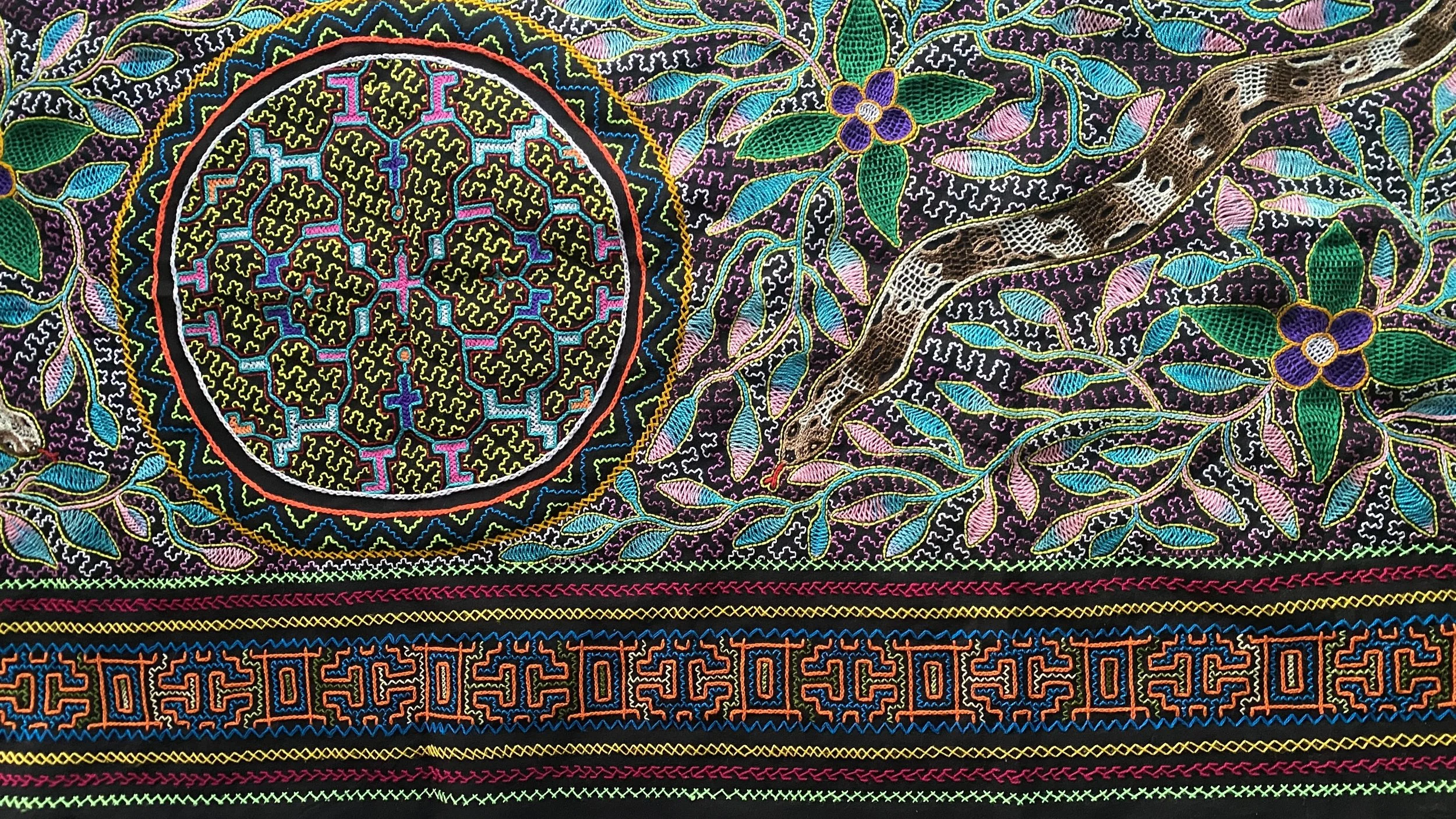
The facilitation team wears white or Shipibo ceremonial clothing adorned with kené (Shipibo designs and patterns). While beautiful, this clothing serves as our ceremonial uniform, which we put on to signify to the Council of Spiritual Elders and Healers that we are ready to work.
Many people opt for natural fabrics, such as cotton or linen. These materials allow for ease of movement and can help regulate body temperature during ceremonies. It is wise to remove any jewelry or accessories that might cause discomfort or distraction. Wear layers so you can easily remove or add clothing if you become too hot or cold. Avoid clothing with logos, brands, sports team names, or writing, as words and symbols carry their own energy.
-
When preparing our ceremonial spaces, it is important to consider how disorienting the effects of the medicine may be. Keeping all your belongings together on one side of your mat makes it easier to find what you need without having to search around for it during ceremony.
-
It is recommended to refrain from drinking water for two hours before the start of ceremony and throughout the ceremony to allow the medicine to work more effectively in our bodies. However, if a pasajero feels dehydrated or needs to ground themselves, they should not hesitate to drink water.
If you choose to abstain from drinking water during ceremony, you may drink as much water as you like once the ceremony has concluded.
STAYING CONNECTED
-
Please fill out the interest form to inquire about ceremonies or other Pino Bewa offerings. Register for a free Proton Mail account and sign up for a free Signal messaging account by downloading the Signal app on your Android or Apple device. Providing a Proton Mail email address and Signal number is required on the intake form. We ask everyone to create these accounts to help secure our communications through end-to-end encryption.
Proton Mail and Signal are the only platforms we use to communicate about ceremonies. Start the connection by emailing us at aho@pinobewa.com or reaching out through Signal (Pino Bewa Community Forum).
-
Sign up for our newsletter for information about our ancestral medicine ceremonial offerings.
-
Aside from Mapacho sopladas, hapé, and Sananga treatments, we do not facilitate experiences with other ancestral medicines, such as mushrooms, bufo, iboga, huachuma, or peyote.
We do, however, have several kambo practitioners in our network who are available for referrals upon request.
-
Pino Bewa is committed to ensuring that everyone who receives a true calling from Spirit to sit in ceremony has the opportunity to do so.
On a case-by-case basis, alternative exchange arrangements are available for individuals with demonstrated financial need.
-
Pino Bewa offers the Ancient Alchemy Initiation Path. Ka’i Sam’e developed this program, envisioned by the Council of Spiritual Healers (Master Plant Doctors, Galactic Surgeons, and Healed Ancestors), to revive the Old Ways by training future channelers, tradition line keepers, ceremonial space holders, and medicine carriers through an intensive mentor-apprentice relationship.
Returning to the Old Ways means working with the elemental forces of nature, Healed Ancestors in the spirit realm, and the power of intention through ancient alchemical practices to catalyze consciousness expansion and physical healing on the earthly plane.
As a central tenet of all spiritually evolved civilizations, the Law of Consistency is applied, with elders teaching the young to preserve the continuity of existence and realize collective consciousness ascension.
-
You can support Pino Bewa by volunteering, referring trusted people in your community, or donating toward the purchase of land to build a permanent retreat center.
-
A portion of the proceeds and all donations are earmarked to secure land so that the Pino Bewa community can have a permanent home for this work.